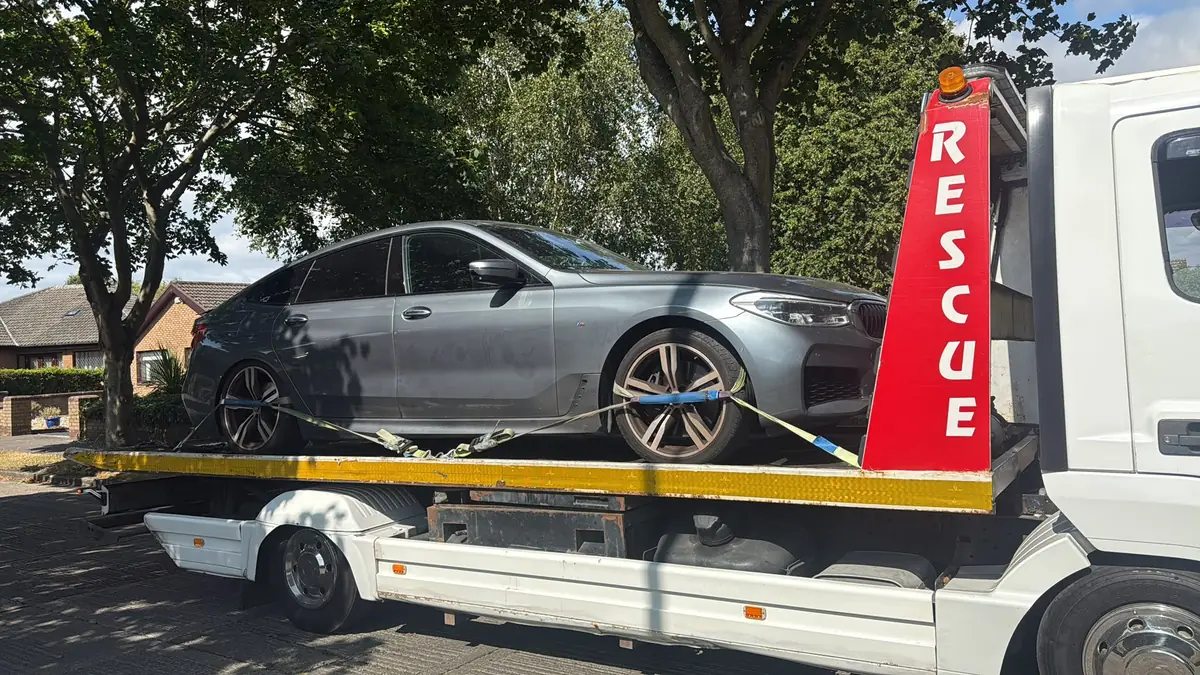
Searching “towing service near me” is usually done in a hurry, with a car that has just stopped and a head full of questions. Will anyone come? What will it cost? What happens to the car? Knowing the steps in advance takes a lot of the stress out of it, so here is how a Recovery CC job goes, from the first ring to the drop-off.
Before the call: are you safe?
If anyone is hurt or in danger, call 112 first. If you are on a fast road, get everyone out on the verge side and stand back behind the barrier. Our call can wait a few minutes. Your safety cannot.
Step 1: the call
The call itself is short. We ask for four things:
- Your name, and the number to ring you back on
- The registration of the car or van
- Where it is now: an Eircode if you have it, or the road, the nearest junction and a landmark
- Where it needs to go: home, your garage, a dealer or another address
Then we ask what happened and anything that changes the loading. Is it a van? Is it electric or hybrid? Will it roll and steer? Is it parked somewhere awkward, like a basement or a tight driveway? Short answers are fine.
Step 2: the price, before anything moves
This is the part people worry about most, so we do it on that first call. A standard call-out starts from €150, plus €2 per km depending on the destination. With the two Eircodes we work out the total with you on the phone.
You agree it, or you do not. The truck sets off only after you have said yes. If something turns out to be very different from what we were told when the truck arrives, we talk to you before the car is loaded.
Step 3: paying
Card over the phone, a pay-by-card link we send you by text, or cash. Pick whichever is easiest at the side of the road.
Step 4: while the truck is on its way
Stay somewhere safe and keep your phone on, so we can ring if we cannot spot the car. If you are waiting on a busy road, wait behind the barrier, not in the car. On a quiet street or a car park, sitting in the car with the doors locked is fine if you feel safe.
Before the truck arrives, take out anything you need: wallet, documents, phone chargers, child seats and anything valuable.
Step 5: loading
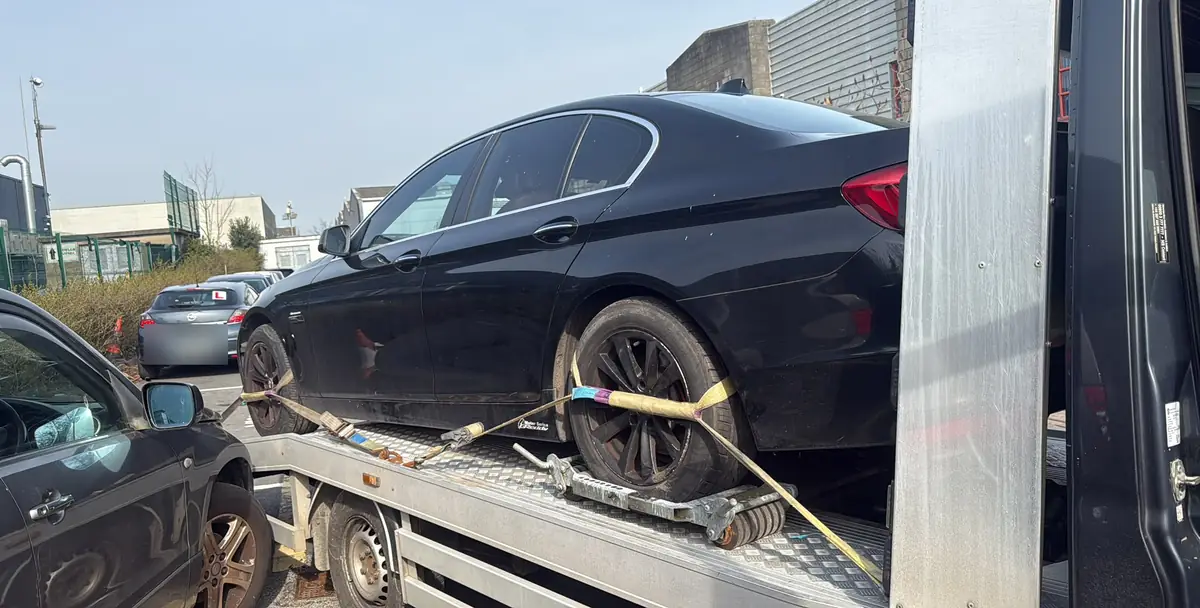
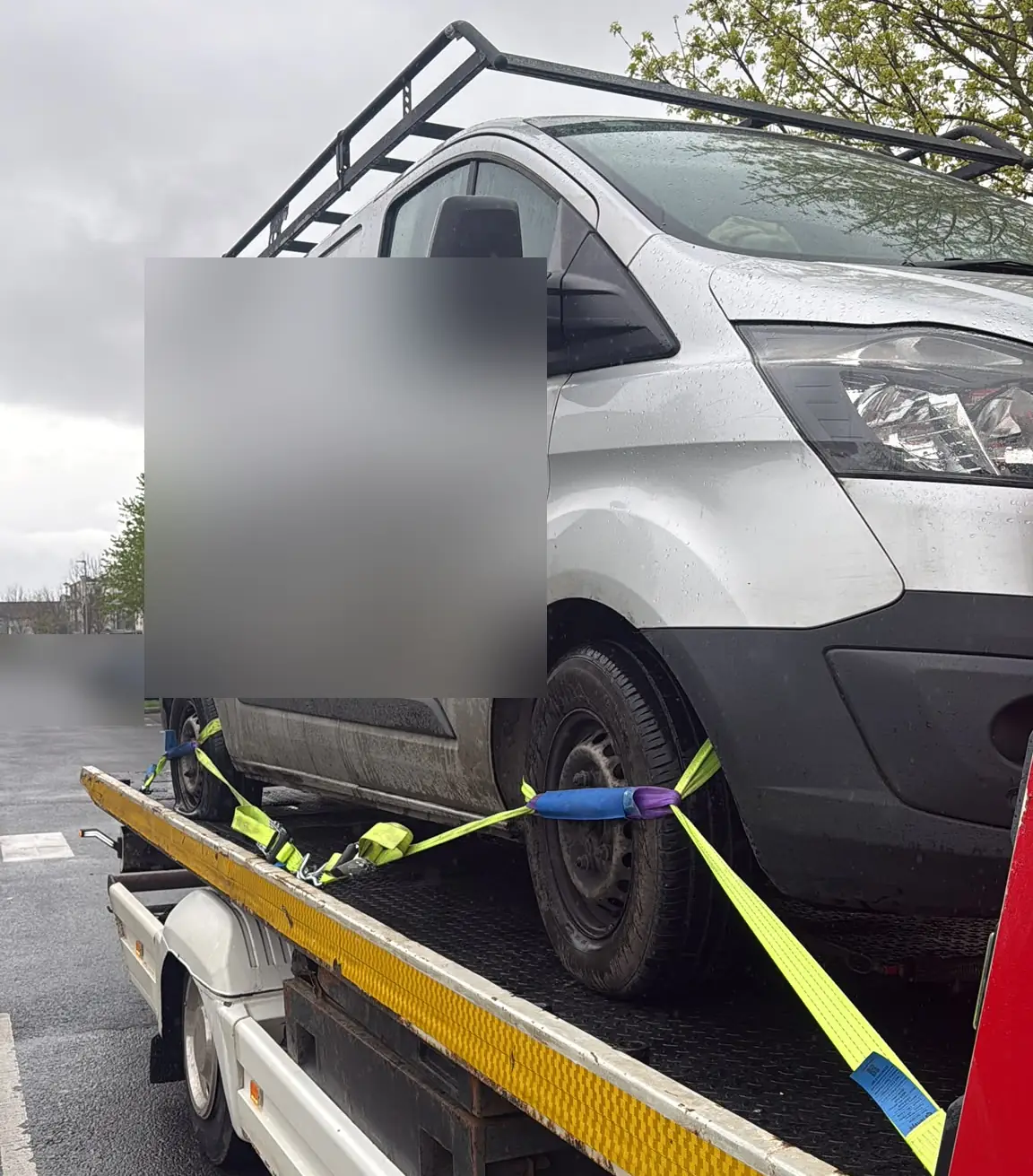
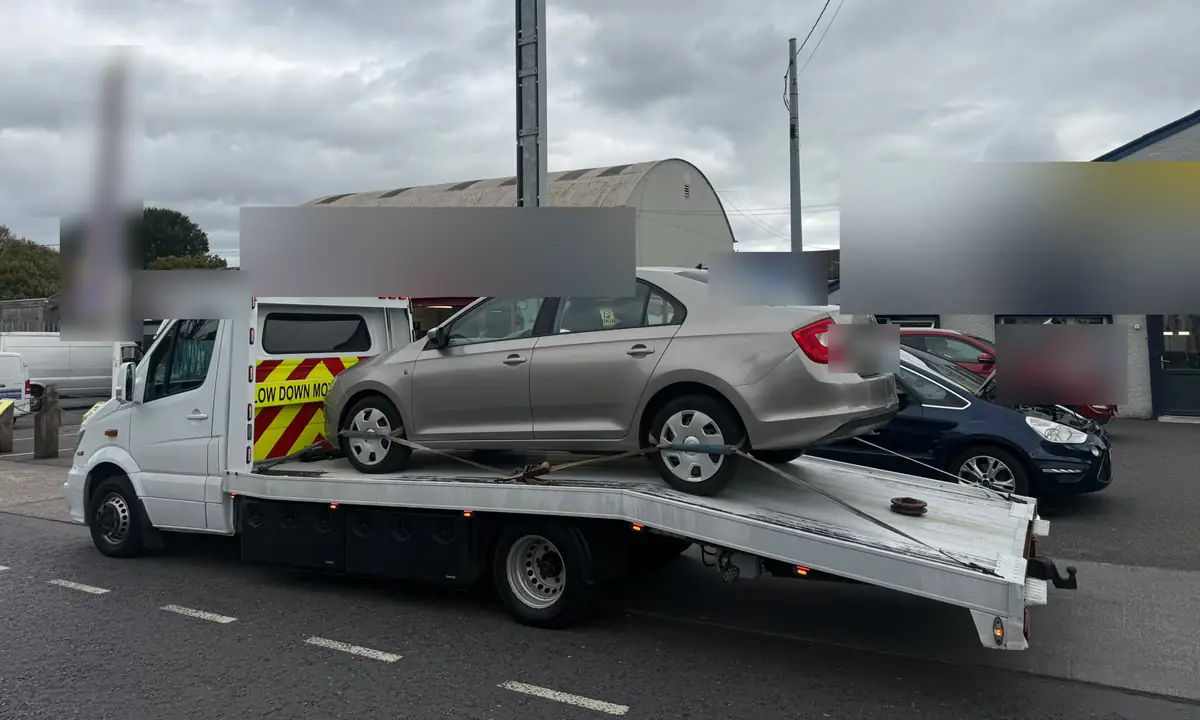
Our tow trucks are flatbeds. The deck tilts down to make a ramp, the car goes up onto it, and it is strapped down at the wheels. The whole car travels with its wheels off the road. That matters for electric cars, for many automatics and for any car with a damaged wheel, because nothing turns on the way.
If the car is low, has flat tyres or will not roll, we load it slowly and carefully. Telling us this on the call means the right plan is ready when the truck arrives.
Step 6: the drop-off
We take the car to the address you gave us. If it is going to a garage that will be closed when we get there, tell us on the first call, so we can agree with you where the car is left and what happens to the keys. If it is going home, make sure there is somewhere to put it down.
Questions worth asking any towing service
Whoever you ring, three questions tell you a lot:
- Will I hear the full price before the truck sets off?
- Is it a flatbed, with the wheels off the road?
- How can I pay?
A good towing service answers all three without fuss. If you get vague answers, ring someone else.
Ready when you are
For breakdown recovery in Dublin, car towing and transport or van towing, the first step is always the same: ring Recovery CC on 087 116 1102, and agree the price before the truck moves.