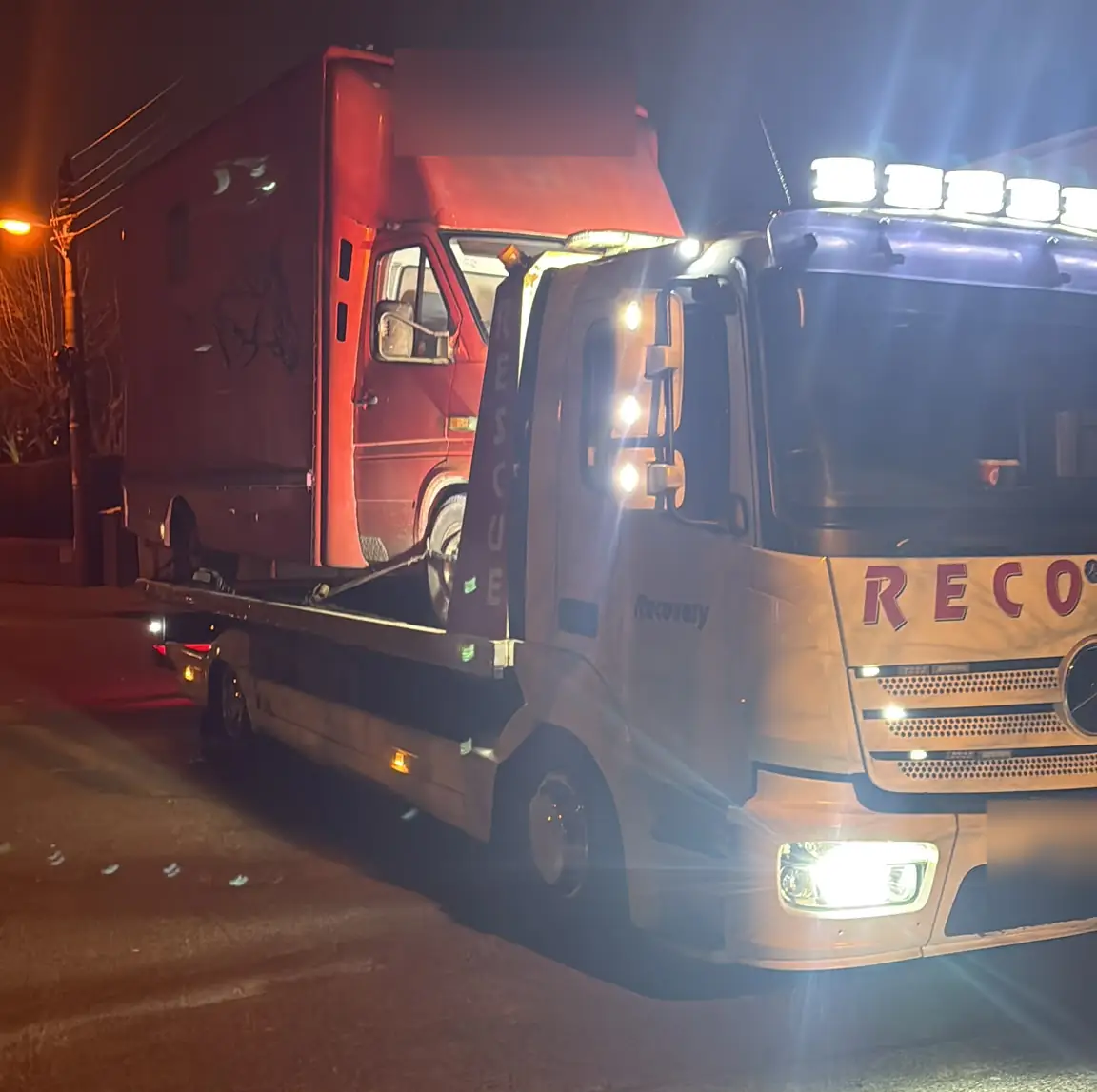
A breakdown is stressful even on a quiet street. On a dark country road or a fast dual carriageway it can be frightening. Having a rough plan in your head before it happens makes a real difference, so here is ours.
1. Notice early and pick your spot
Most cars give some warning: a light on the dash, a loss of power, a new noise, a smell. If you can still steer and brake, use those last moments to choose where you stop. A lay-by, a side road, a car park or a wide gateway is far better than the middle of a lane.
Indicate, slow down gradually and pull in as far from the traffic as you can.
2. Hazard lights on
As soon as you are stopping, switch on the hazard lights. If it is dark, foggy or raining hard, leave the sidelights on as well, so the car is easy to see.
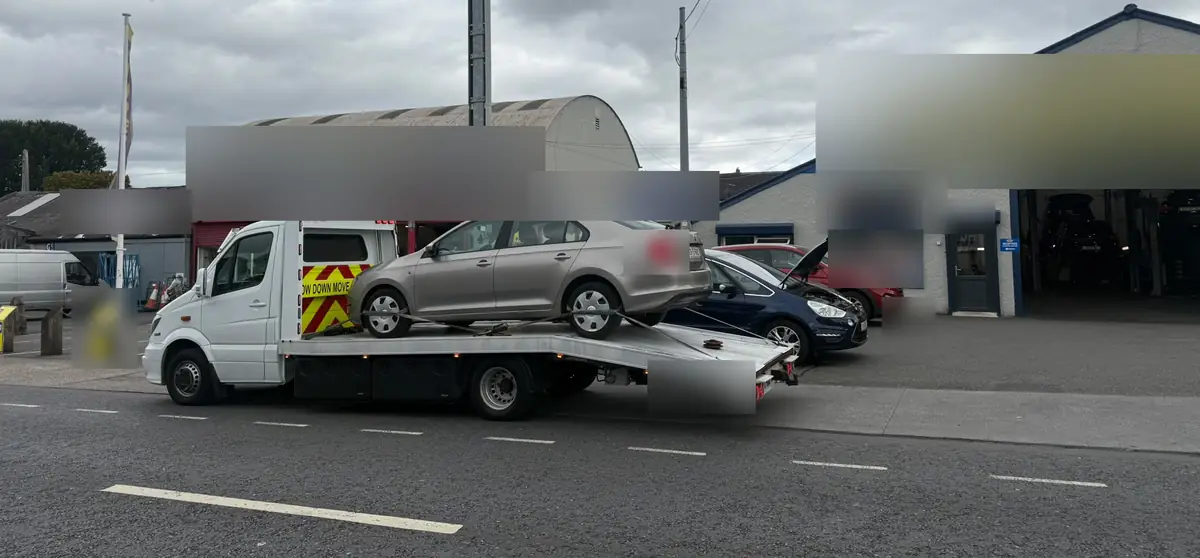
3. Where you are changes what you do
In a town or a housing estate
Traffic is slower, so staying in the car is often fine, especially in the rain or with children. Pull in where you are not blocking a junction, a bus stop or someone’s driveway. If you are on a busy road with no footpath to speak of, climb out on the kerb side, away from the passing cars, and wait somewhere safe nearby.
On a rural road
Country roads have bends, high hedges, no lighting and very little room. Drivers coming round a corner may not see you until late. If the car is on or near a bend or the brow of a hill, get everyone out and well away from it, behind a wall, a gate or up on the verge. Do not stand between the car and oncoming traffic.
On a motorway or dual carriageway
These need their own approach, and staying in the car is usually the wrong choice. Read our motorway breakdown guide, and if you are on the M50 our M50 step by step.
4. Getting out safely
Before opening a door, look in the mirrors. Get out on the side away from the traffic, and help passengers do the same. Children should be held by the hand. Pets are usually safest left in the car unless the car itself is in danger.
Put on a high-visibility vest if you have one. They cost very little and they are worth keeping in the door pocket.
5. Warning triangles: only if it is safe
On an ordinary road, a warning triangle placed well behind the car gives approaching drivers more time. Only do it if you can walk there and back without stepping into traffic. Never put one out on a motorway. Walking along the hard shoulder is more dangerous than going without.
6. Is it a breakdown or an emergency?
Call 112 or 999 straight away if:
- Anyone is hurt or unwell
- You are stuck in a live lane and the car will not move
- There is smoke, fire or a strong smell of fuel
- You feel unsafe for any reason, including because of other people
The emergency services would much rather hear from you than find out later. Once that is dealt with, or if none of it applies, you can think about recovery.
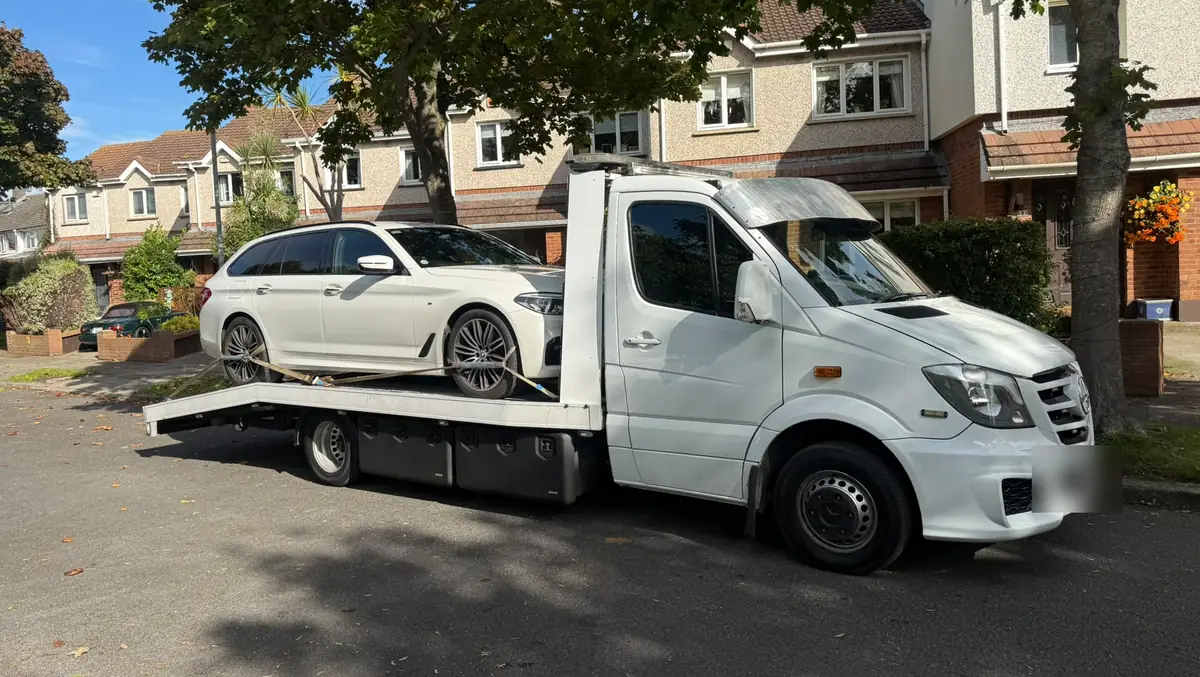
7. Work out exactly where you are
This is where most calls slow down. Before you ring, find:
- The road name or number, and the nearest town
- The direction you were travelling
- A landmark: a junction, a petrol station, a pub, a church, a bridge
- The Eircode if you are outside a house or business
Most phones can share your location as a map pin in a message. It is the most useful thing you can send. If you have no signal, note the last place you passed.
8. Ring for help
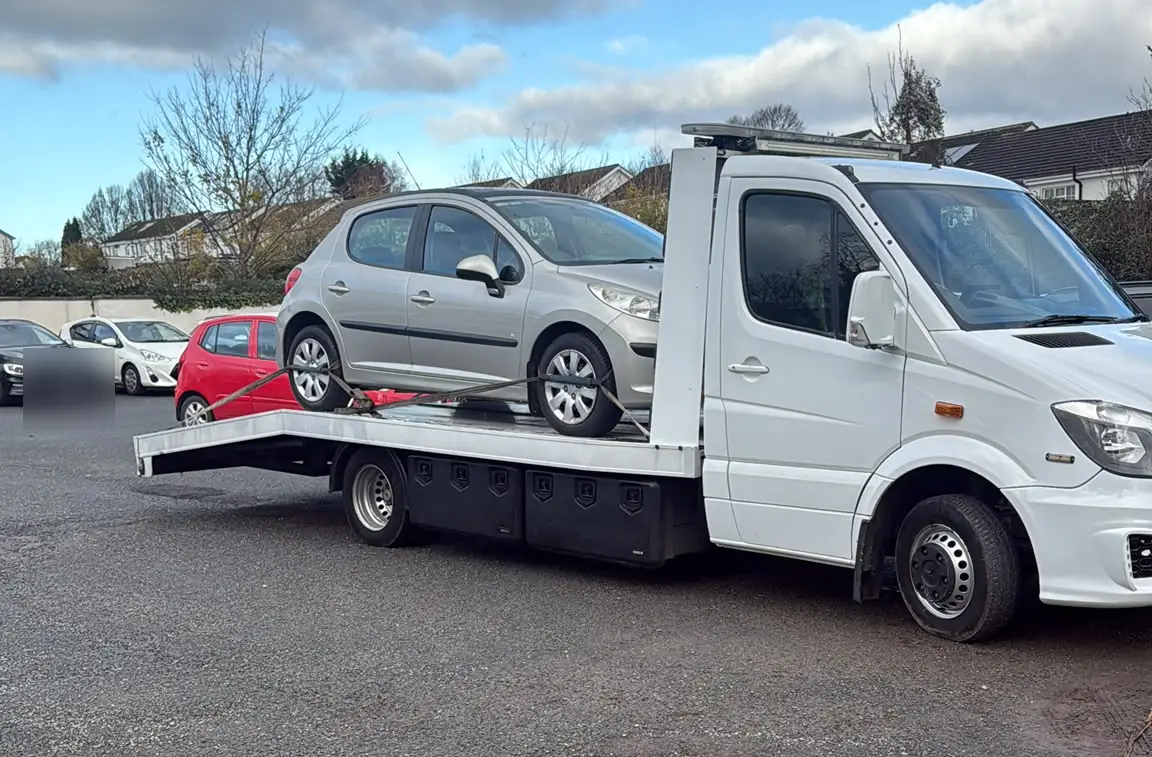
Tell the recovery company what the car did before it stopped, and whether it will roll, steer and brake. They will also want the registration and where you want the car taken. With us, that is your name, the registration and the two Eircodes: where the car is and where it should go. We give you the price on the call, a standard call-out from €150 plus €2 per km depending on the destination, and the truck sets off once you have agreed.
If you are not sure whether the car needs a tow or could be sorted where it is, our note on roadside assistance vs towing may help.
9. Leave the repairs alone on a busy road
Changing a wheel or poking around under the bonnet with traffic passing a metre away is not worth it. On a quiet street with plenty of room, a simple job may be fine if you know what you are doing. Anywhere fast, narrow or dark, wait for help.
10. While you wait
- Stay somewhere safe, away from the car if it is on a fast road
- Keep your phone on and charged, so the driver can ring you
- Keep warm and dry. Irish weather turns quickly
- Lock the car if you are leaving it, and keep the keys with you
- Do not accept a tow from a stranger with a rope
A few situations worth thinking about now
At night
Visibility is the big risk. Hazard lights and sidelights on, high-vis on, and keep well away from the road. A small torch in the glovebox is a good idea, as your phone torch drains the battery you need for calls.
In heavy rain or wind
Drivers see less and stop more slowly. Get further back from the road than you would on a dry day.
A puncture with no spare
Many cars only carry a repair kit. It can work for a small nail hole, but not for a torn or badly damaged tyre. If the kit will not do it, the car may need to go on a truck to a tyre fitter or your garage.
A flat battery at home or in a car park
This is the least dangerous kind of breakdown, so you have time. Tell the recovery company where the car is parked, which level if it is a multi-storey, and any height barrier.
A small kit for the boot
- High-visibility vest for each adult
- A torch
- A warm coat or blanket
- A phone charging cable
- Water, and something to eat on a long trip
The car can always be sorted later. When everyone is safe, ring us on 087 116 1102, or read more on our breakdown recovery page.